in Current Affairs | December 2nd, 2010 5 Comments
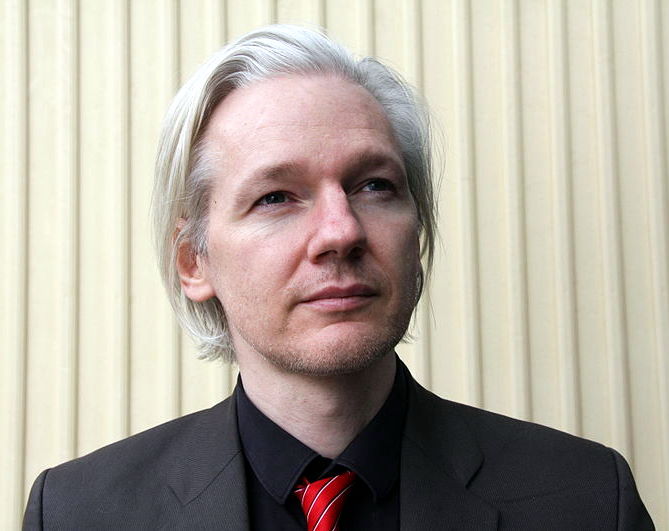
 Trying to make heads or tails of WikiLeaks, which just released 250,000 US diplomatic cables this week? Then you may want to spend some time with one article and one video. First,?The New Yorker published this summer an extensive profile of Julian Assange, the driving force behind WikiLeaks. A key passage explaining Assange’s world view appears below, and you can get the full profile right here. Next up, we have Chris Anderson, the head of TED, in conversation Assange. The interview, running 20 minutes, tells you essentially?“Why the World Needs WikiLeaks.” And then why not add to the list Forbes’ lengthy interview with Assange, published earlier this week. (Thanks Avi for that.)
He had come to understand the defining human struggle not as left versus right, or faith versus reason, but as individual versus institution. As a student of Kafka, Koestler, and Solzhenitsyn, he believed that truth, creativity, love, and compassion are corrupted by institutional hierarchies, and by “patronage networks”—one of his favorite expressions—that contort the human spirit. He sketched out a manifesto of sorts, titled “Conspiracy as Governance,” which sought to apply graph theory to politics. Assange wrote that illegitimate governance was by definition conspiratorial—the product of functionaries in “collaborative secrecy, working to the detriment of a population.” He argued that, when a regime’s lines of internal communication are disrupted, the information flow among conspirators must dwindle, and that, as the flow approaches zero, the conspiracy dissolves. Leaks were an instrument of information warfare.
Share:
This entry passed through the Full-Text RSS service — if this is your content and you're reading it on someone else's site, please read our FAQ page at fivefilters.org/content-only/faq.php
Five Filters featured article: Beyond Hiroshima - The Non-Reporting of Falluja's Cancer Catastrophe.
View the original article here